
Caring for Caribou
Text and photos by Philippe Henry
June 23, 2026
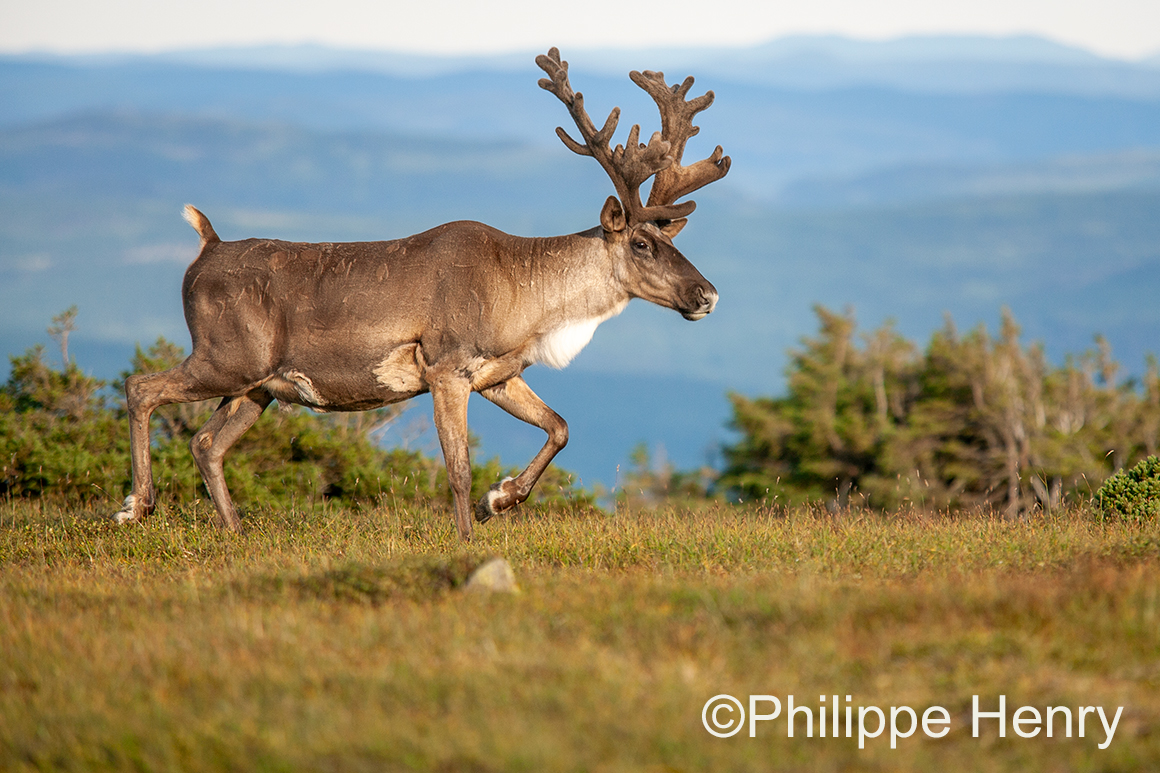
Caribou male on mount Jacques Cartier area in summer.
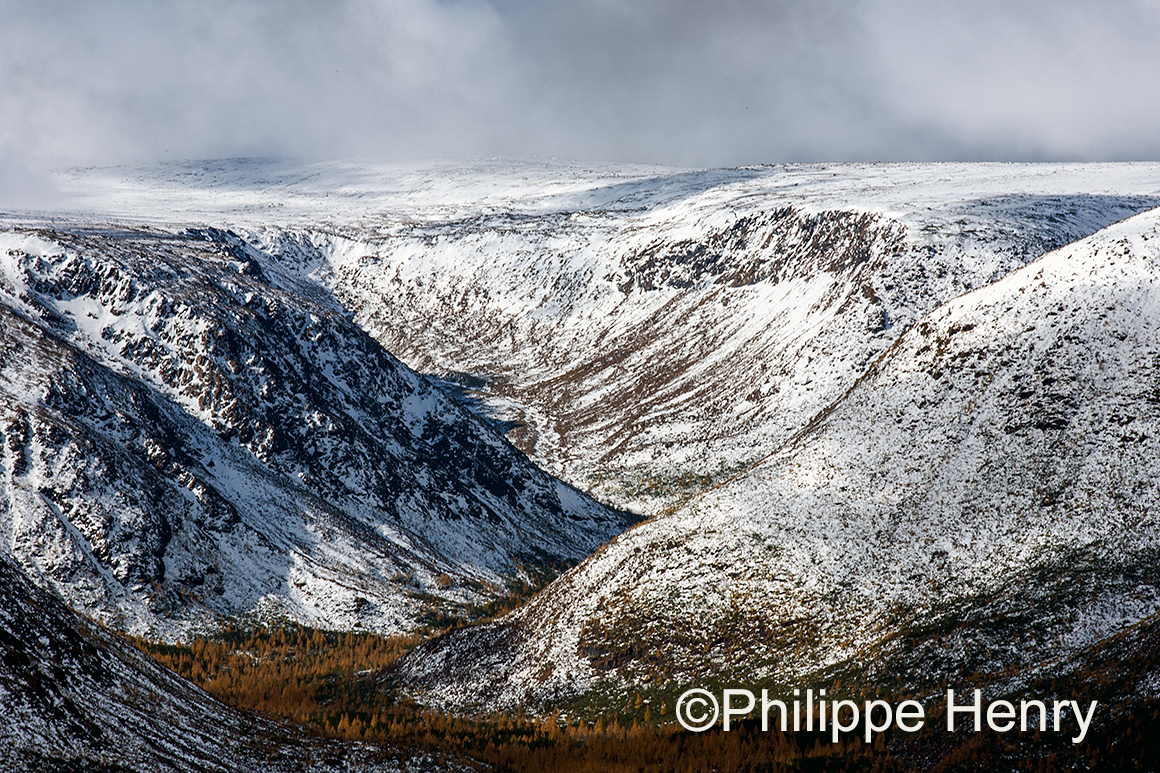
A herd of the Gaspe caribou lives in the alpine environment and high-altitude tundra of mount Albert in the Chic-Chocs mountains of the Gaspesie national park.
To reach the summit of Mont Jacques Cartier, in the Gaspésie National Park, I climb through a subalpine forest dominated by white spruce [Picea glauca], and then through highlands densely matted with twisted black spruce [Picea mariana] and balsam fir [Abies balsamea] known as Krummholz. When I finally reach the top, about 1,270 meters up, I am in the alpine tundra, a rugged and beautiful landscape of lichen-covered granite that reminds me of the vast expense of Quebec’s Far North. I’ve been here several times over the past years photographing and filming caribou.
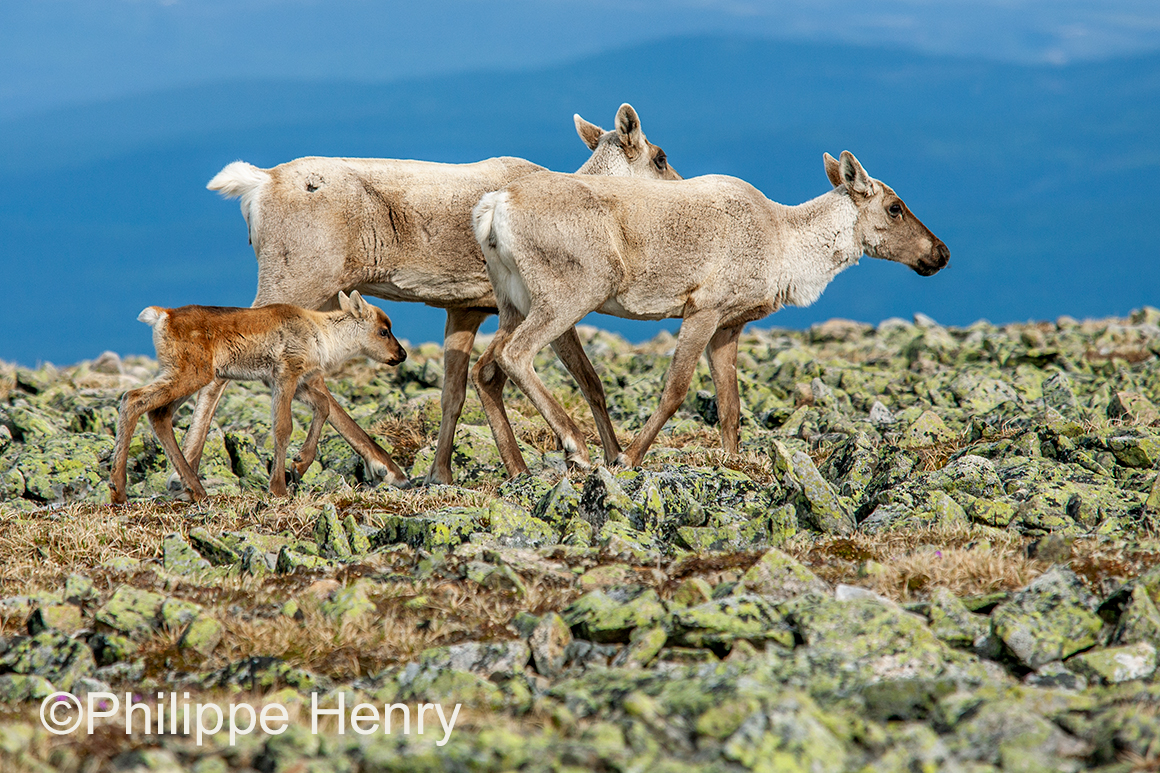
Newborn Caribou and females on top of Mount Jacques Cartier in the McGerrigle mountains.
In these highlands, caribou can escape their predators who have today easier access to the National Park due to logging operations. In December 2025, Martin-Hugues Saint-Laurent, a professor of animal ecology at the University of Quebec at Rimouski (UQAR), told me that 60% of the old-growth forests surrounding Gaspésie National Park had been harvested in the last 35 years, and that it had been shown that these forests formed a natural barrier against caribou predators such as black bears and coyotes, which now have much easier access to the national park and prey primarily on young calves. “A predator control strategy was implemented as early as the 1990s,” he said, “but it is not a viable long-term solution. Too much old-growth forest has been harvested on the periphery of the park, and 70 to 80% of the woodland caribou predators would need to be removed to see an effect—an impossible goal to achieve.” And this predator control has an effect on other animal species since fishers, white-tailed deer, Canada lynx, moose, hares and red foxes have been fatally caught in snares and leg traps set to capture coyotes and black bears.
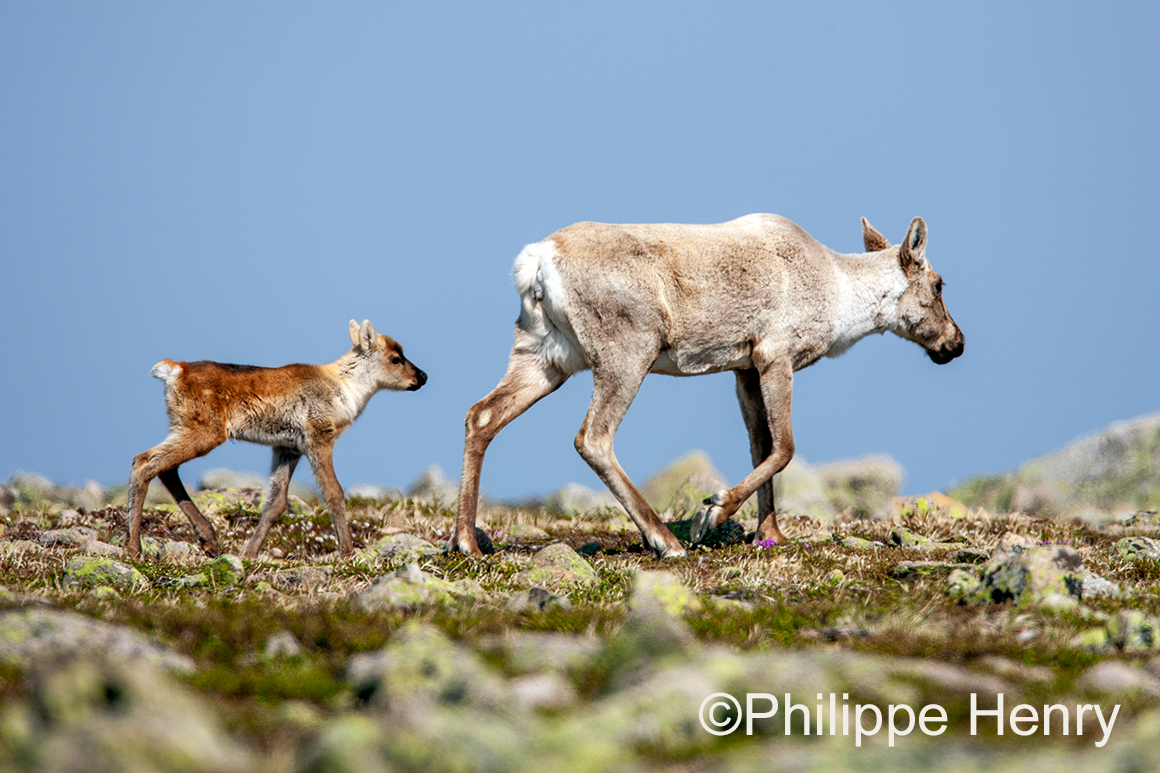
Newborn Caribou and female on top of Mount Jacques Cartier in the McGerrigle mountains
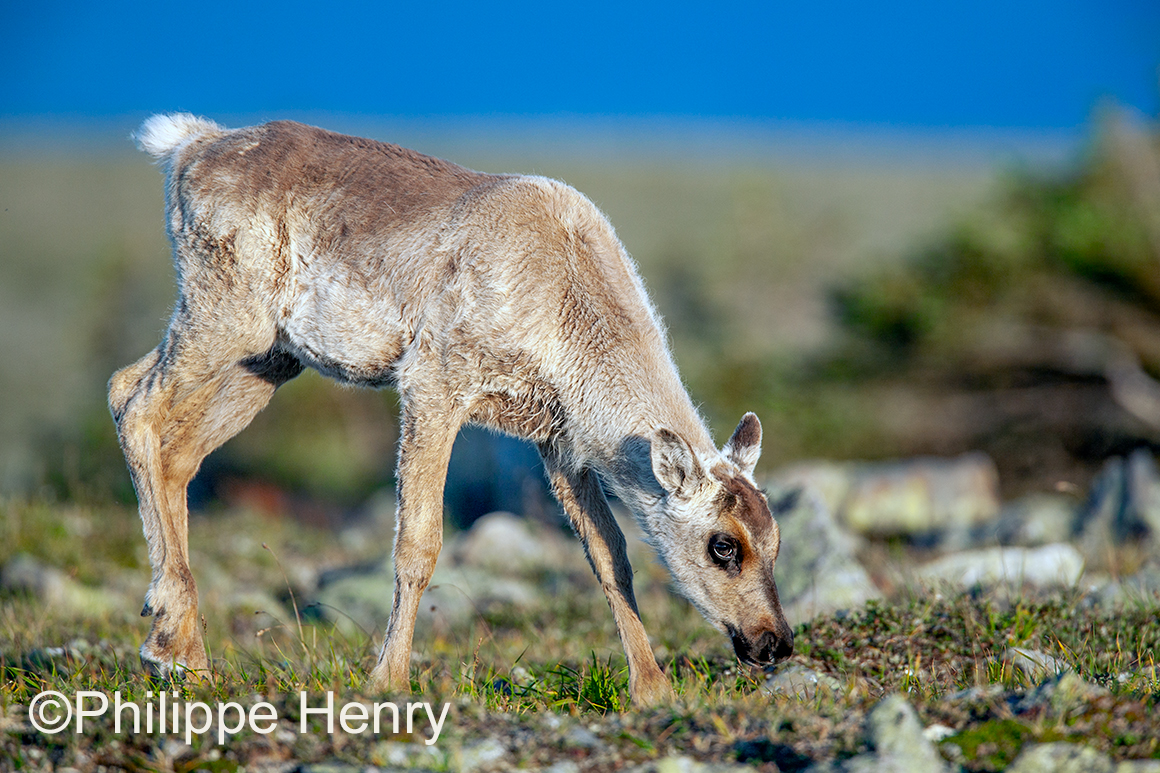
During the summer season, caribou eat leaves of deciduous shrubs (e.g., willow, birch), most terrestrial and arboreal lichens, a variety of fungi, and a variety of herbaceous plants.
The woodland caribou population of the Gaspé Peninsula historically inhabited forested areas of Quebec, the Maritime provinces, Maine, Vermont, northern New Hampshire, and New York State. Habitat loss, associated with logging and mining, forest fires, and agriculture, as well as overhunting (which has been prohibited since 1949), led to its decline. At the first census in 1953, the Gaspésie National Park caribou herd numbered approximately 750 individuals. By 1983, this number had dwindled to only 270. By 2026, just over 30 remained.
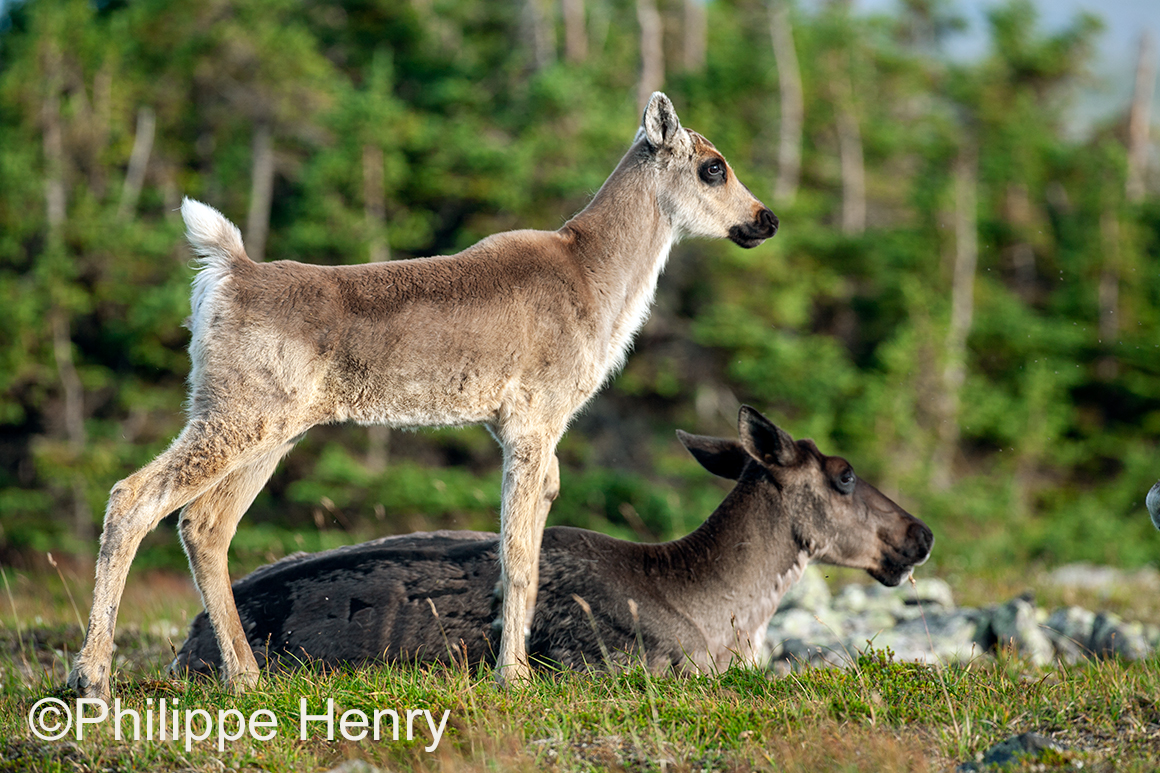
During the summer season, caribou eat leaves of deciduous shrubs (e.g., willow, birch), most terrestrial and arboreal lichens, a variety of fungi, and a variety of herbaceous plants.
Caribou tend to use the alpine tundra in summer and autumn and 90 per cent of their movements in the park take place above 700 meters of altitude These past years, satellite collars fitted on caribou showed that the animals’ home range overflowed the park’s boundaries into areas logged by forestry companies. Logging not only facilitates access for predators but also destroys old growth forests of fir and spruce that support arboreal lichens that are the main food source for caribou during the winter and where they find refuge from winter storms. Arboreal lichen is often a sign of a mature forest ecosystem and the absence of pollution. Although containing little protein, these lichens provide the caribou with energy when the snow is too deep to access other food sources.
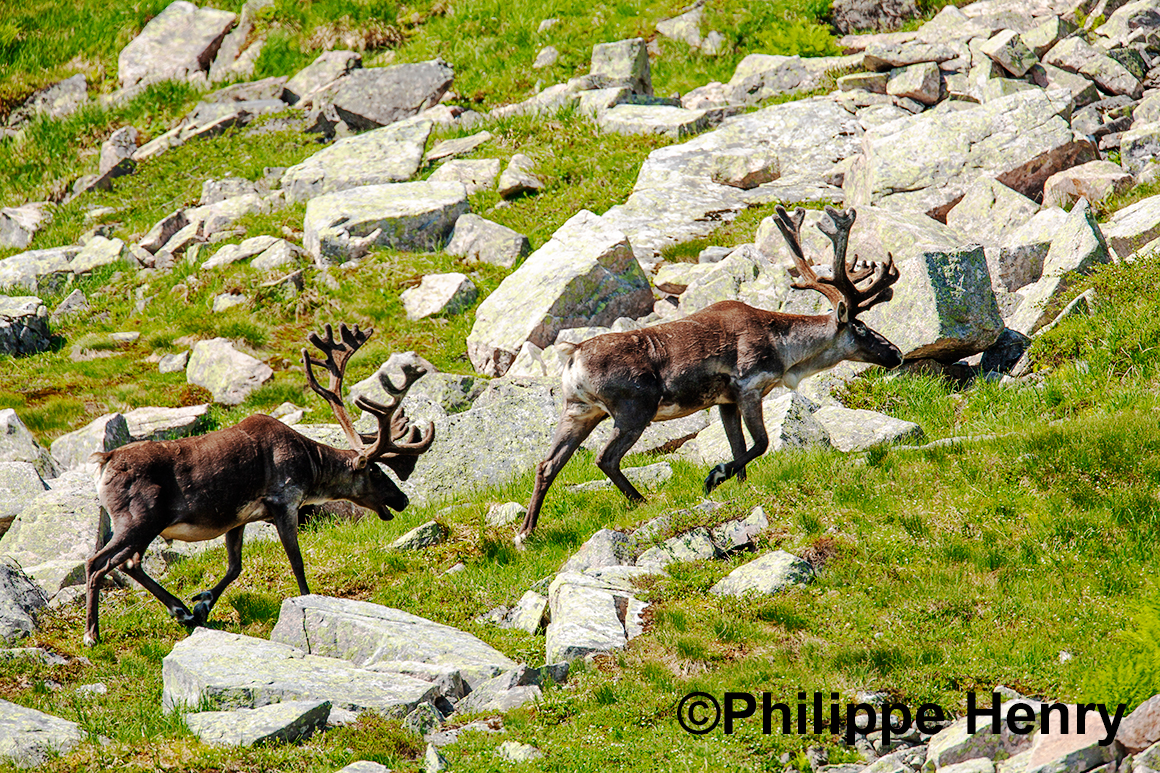
Caribou males on mount Jacques Cartier area in summer.
Mr. Claude Isabel, former director of conservation and education for the Gaspésie National Park, told me, “I am extremely pessimistic about the survival of the Gaspé caribou population. Examining the dynamics of this population since the first inventory in the early 1950s, the trend is unequivocal. Its disappearance must absolutely be considered. Several actions have been deployed to try to reverse or stop its decline, unfortunately without success. Since there are still individuals of reproductive age, it is biologically possible to save this unique population. But the political, social, and economic context is not favorable. Organizations working for its recovery are waiting for the submission of a recovery strategy, which has been postponed by the government for over 10 years. This inaction imposes a short-term vision that favours the continuation of the practices that led to the current situation. For all species in all ecosystems, habitat is the cornerstone of their survival. Thus, in the case of the Gaspé caribou, large-scale habitat loss and transformation is responsible for its precarious situation.
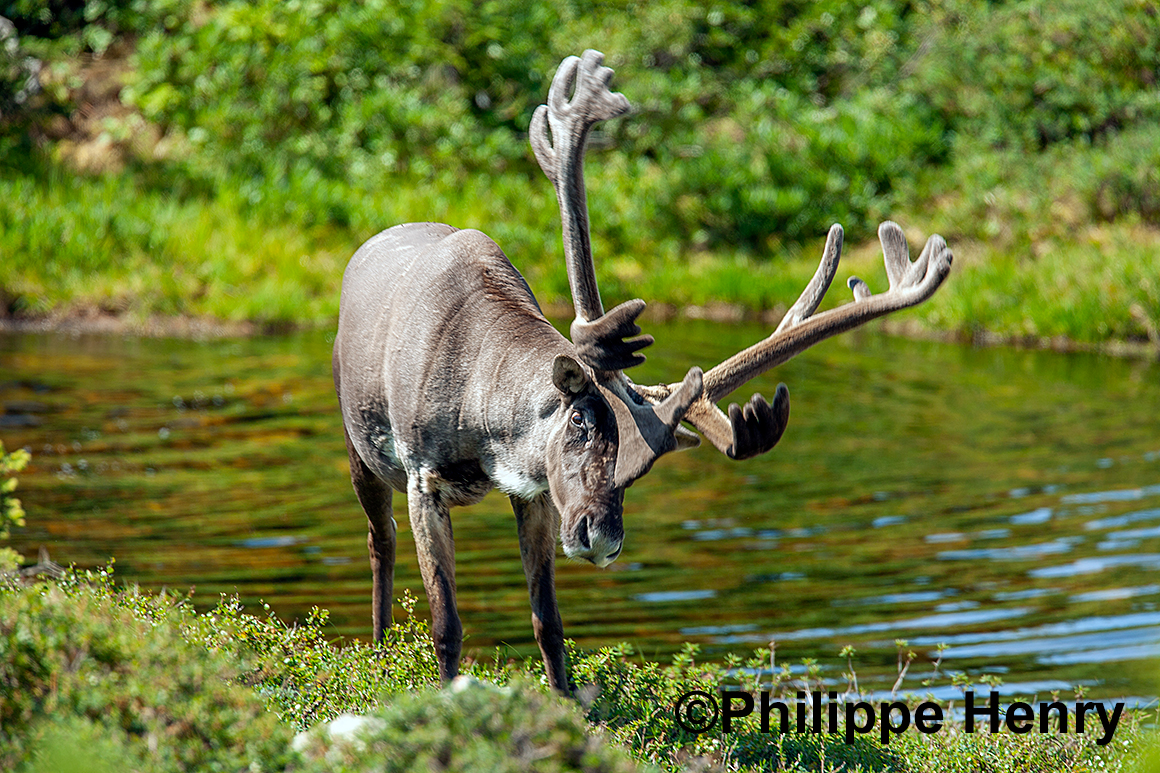
Caribou males on mount Jacques Cartier area in summer.
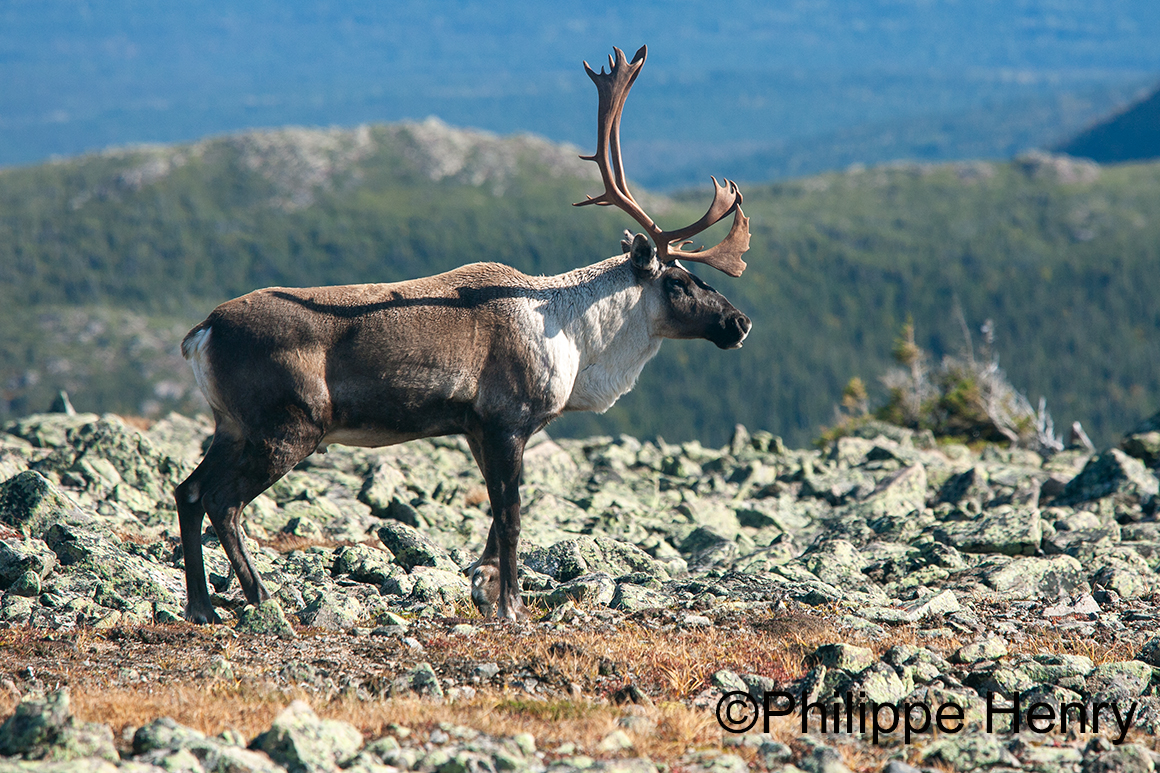
In the Gaspesie national park, male caribous gather on alpine tundra of mount Jacques Cartier and mount Albert for the rutting season that takes place in mid-October.
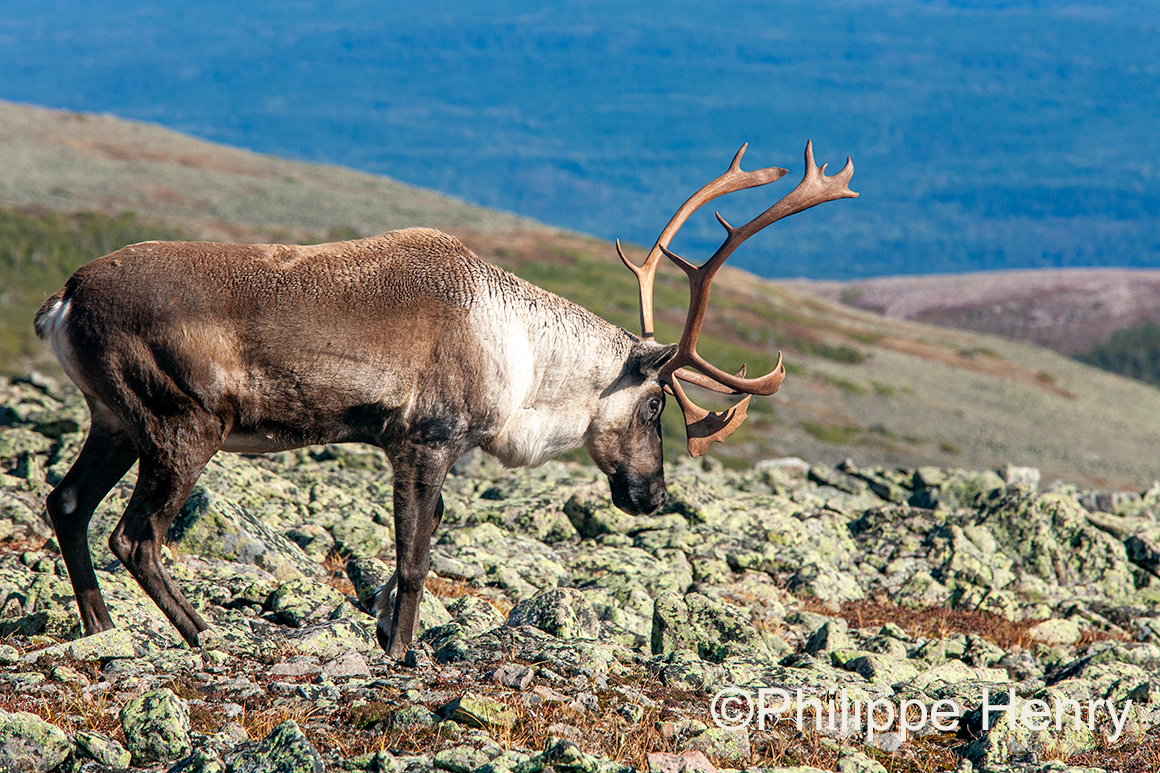
Caribou males on Mount Jacques Cartier area in October
From my perspective, conservation requires a complete paradigm shift. It is essential that industrial logging in the central Gaspé Peninsula and eastern Lower St. Lawrence cease. Land and species management must be based on objectives other than purely economic ones. It seems imperative to me to bring our activities back to a human, local, and regional scale.
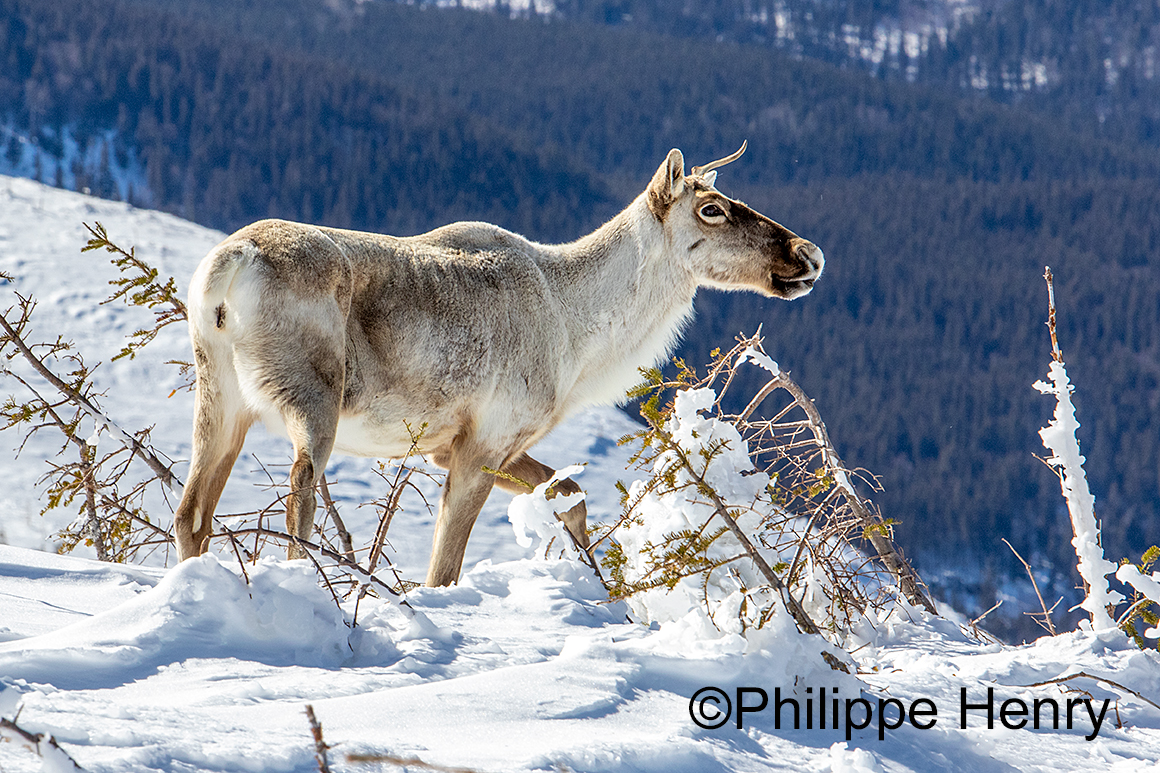
“All reindeer and caribou in the world are one species,” said Réhaume Courtois, who was head of the biodiversity and wildlife disease department of Quebec’s Ministry of Natural Resources and Wildlife. “From the four subspecies found in North America, only the woodland caribou is present in Quebec.” The subspecies are divided into three ecotypes, depending on preferred habitat: the migratory barren-ground caribou, comprising two large populations occurring in the tundra and the taiga of the northern Quebec-Labrador peninsula, the forest-dwelling ecotype, made up of scattered small boreal forest populations and the mountain ecotype found in Gaspésie National Park and in the Torngat mountains, in Labrador.
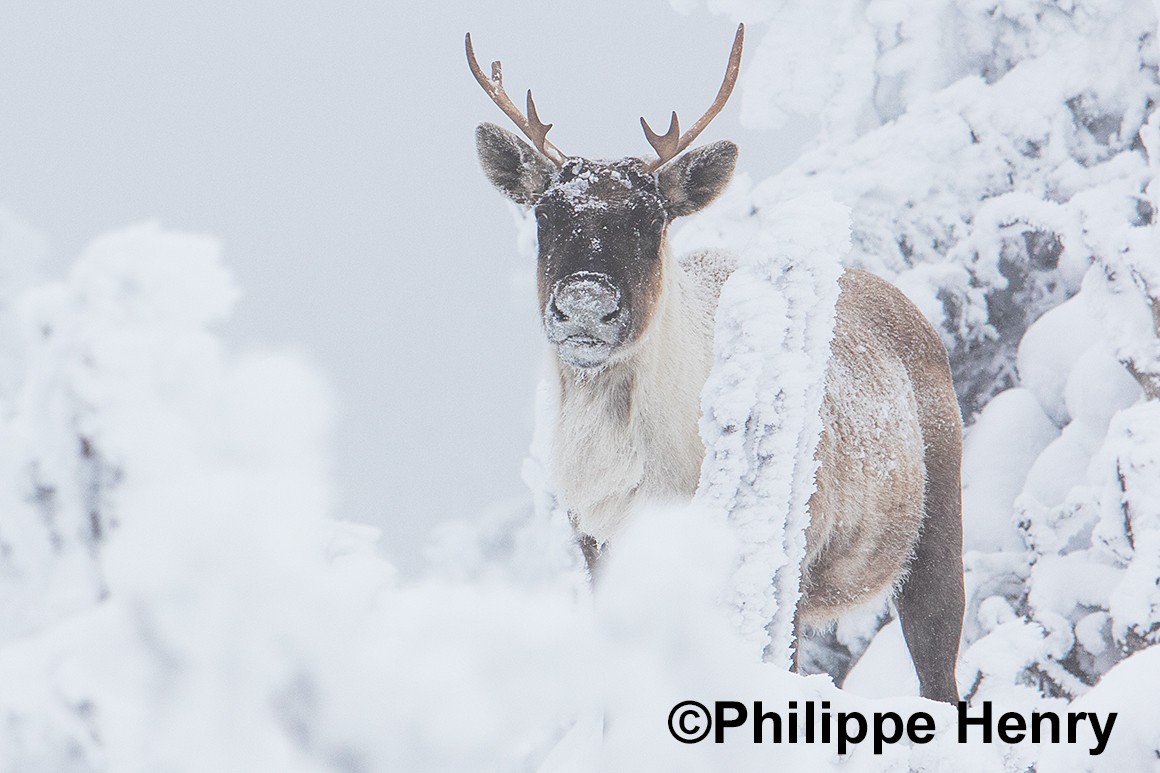
In winter, caribou wide hooves act like snowshoes, and they wear thick, insulating coat to withstand sub-zero temperatures.
Although it is theoretically possible for individuals from these three caribou ecotypes to interbreed, introducing individuals from the other two ecotypes to Gaspésie to strengthen the population wouldn’t work because each group behaves differently. “The Gaspésie mountain caribou are intimately related to the mountains all year long, while barren-ground caribou are migratory. The forest-dwelling and the mountain ecotypes have more similar behaviour but are still too different to be interchanged,” says Courtois. “Even if we reintroduce forest-dwelling caribou, which tend to remain in the forest year-round, they would certainly disperse, as they do in their usual habitat.” The best way to conserve the mountain ecotype, he says, is to protect the existing population.
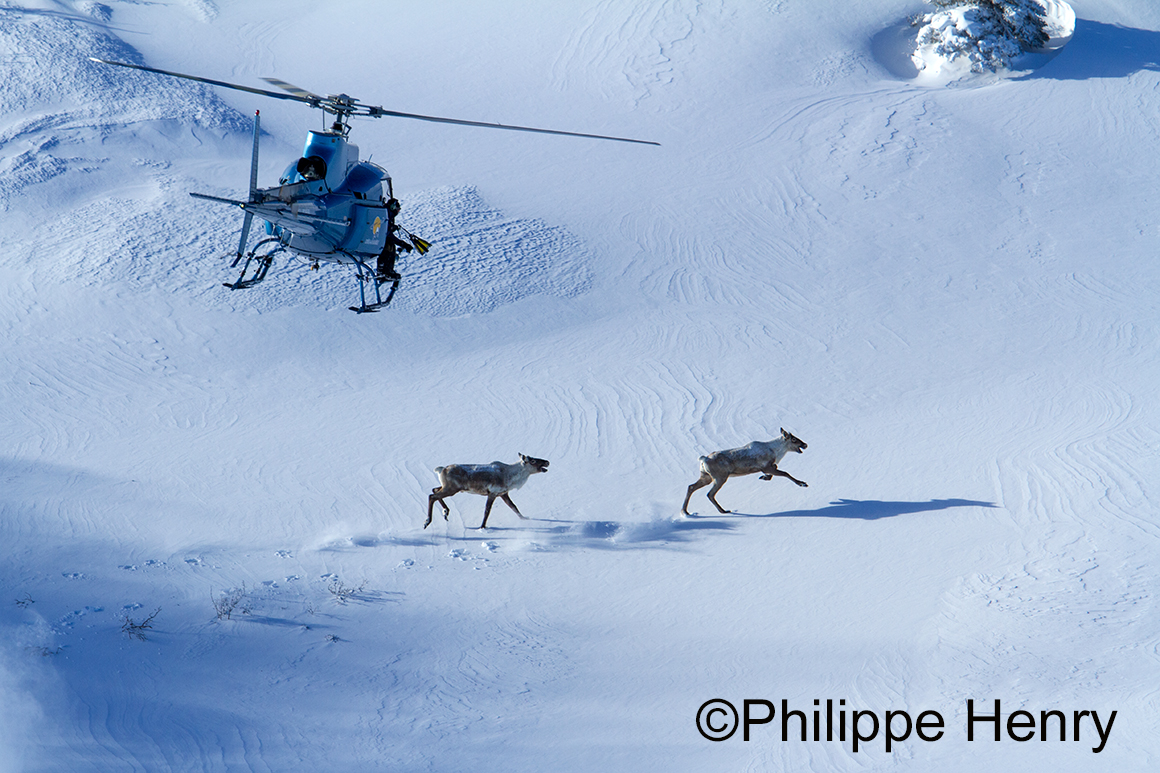
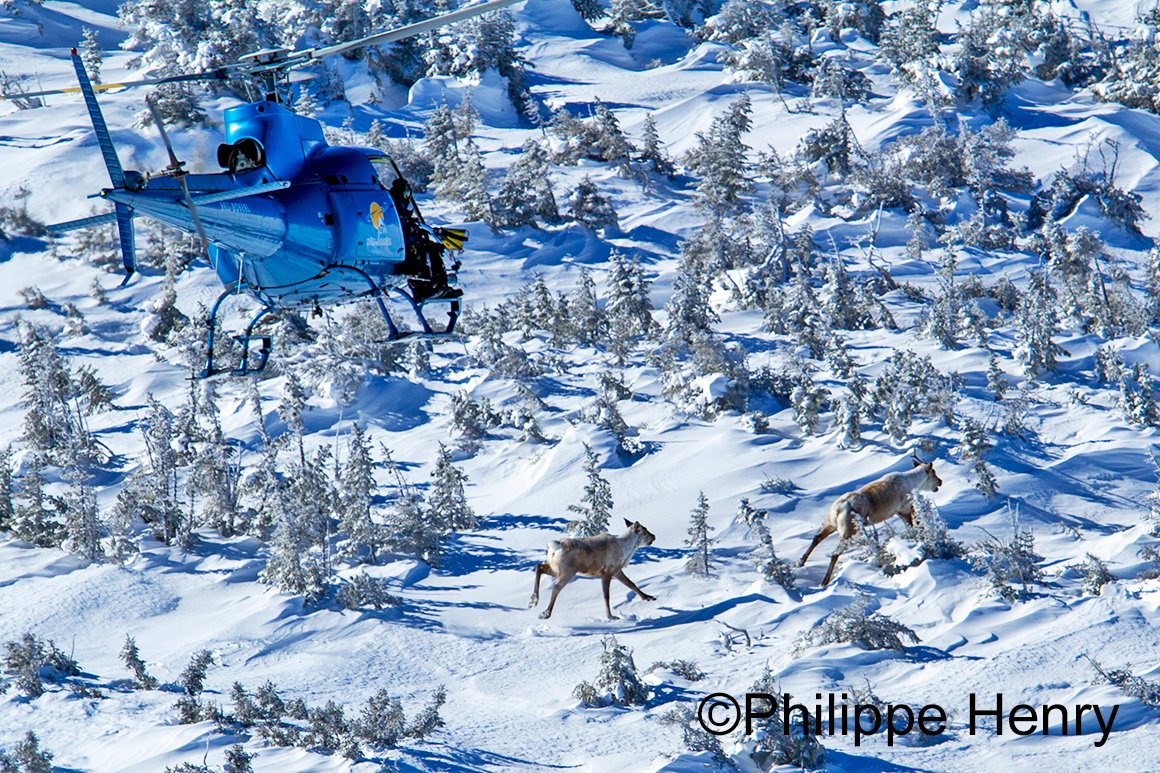
These past years, caribou have been captured and fitted with satellite collars. The operation involved a skilled net-gunner who fires a weighted net over the animal from the air.
Martin Hugues St. Laurent told me “by the fall of 2025, only about 36 caribou remained in the Gaspésie National Park: 14 in the wild and 22 that had been captured and placed in captivity. Of these last 36 caribou, and by decision of the Ministry of the Environment pregnant females have been placed in maternity enclosures where they are safe from predators and fed to their fill, under the constant supervision of keepers and veterinarians. Will this allow the herd to rebuild? The Ministry has not specified when the animals will be released, and if they are, what future awaits them after decades of inaction in protecting their habitat?
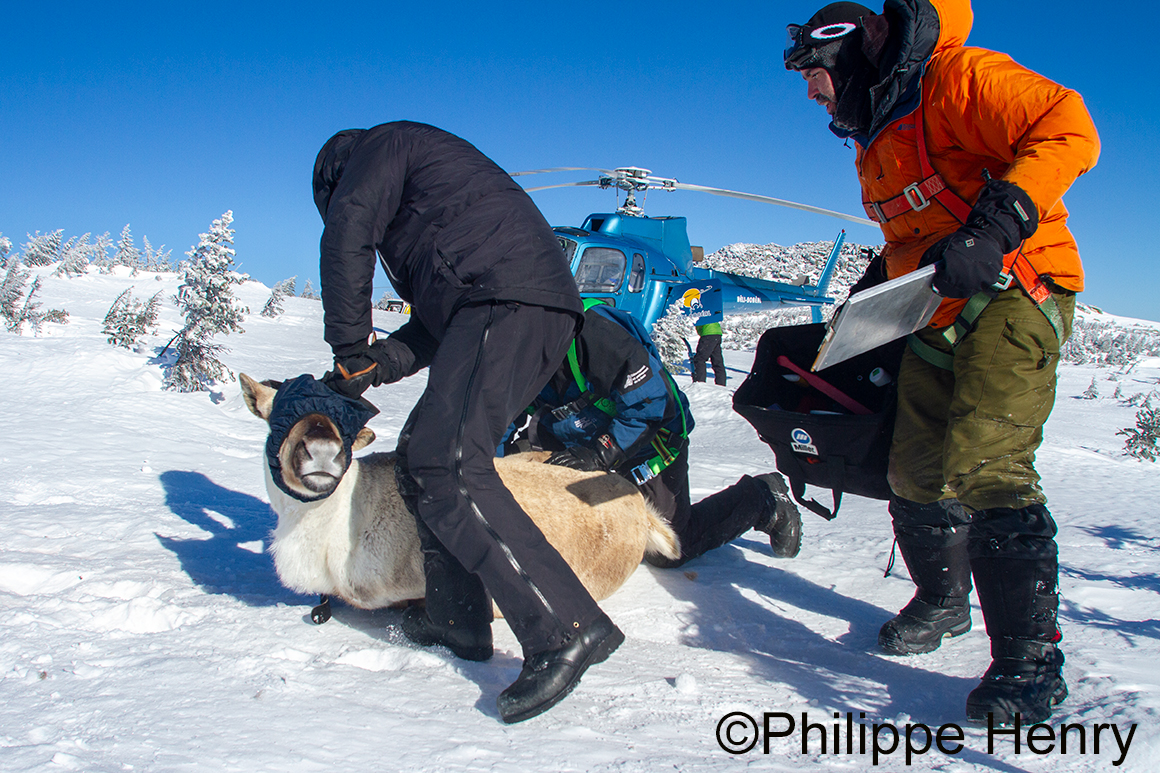
Caribou captured and fitted with satellite collars. Satellite collars fitted on caribou showed that the animals’ home range overflowed the park’s boundaries into areas logged by forestry companies.
Before leaving the park, I trek up one final peak, Xalibu, named for the Algonquin word for caribou. It means “the one who paws through snow”. Intimately adapted to their environment, caribou have always been important for First Nations peoples, from British Columbia to Newfoundland to the Far North, and they remain an important symbol of wilderness and wildlife.
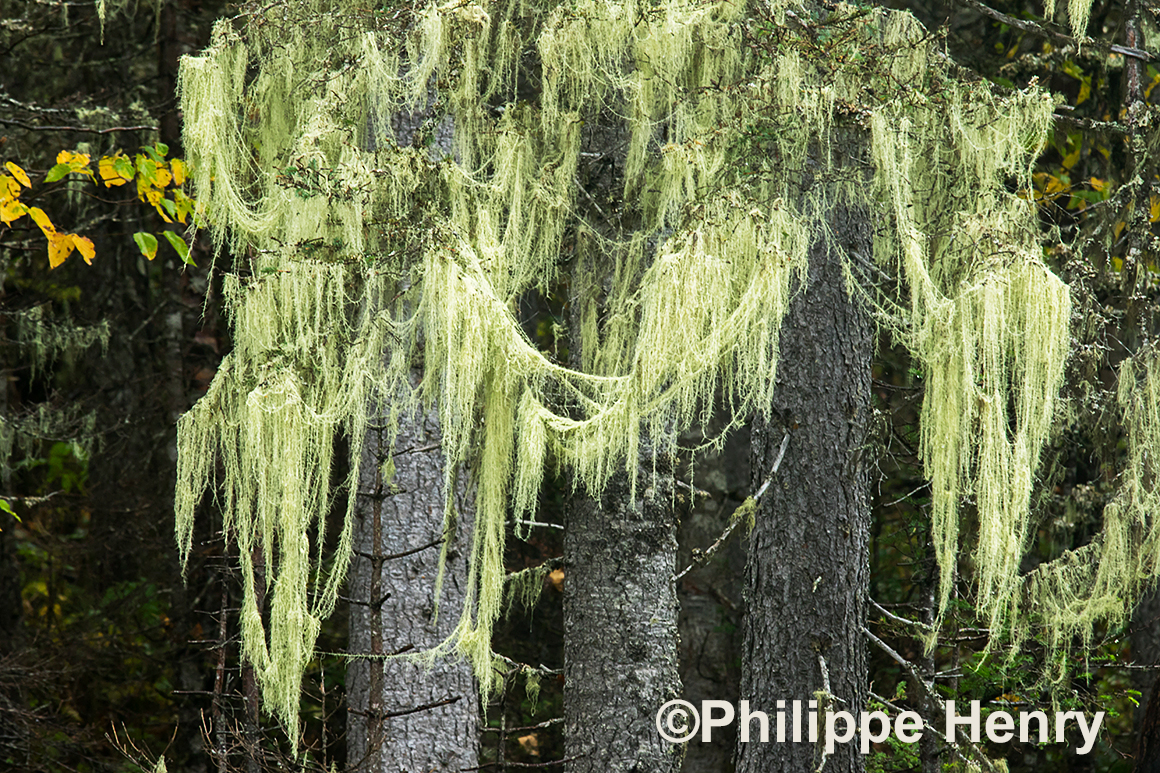
In autumn and winter, lichen forms the basis of the caribou daily diet. Lichen provides them with the energy needed to survive the extreme cold.
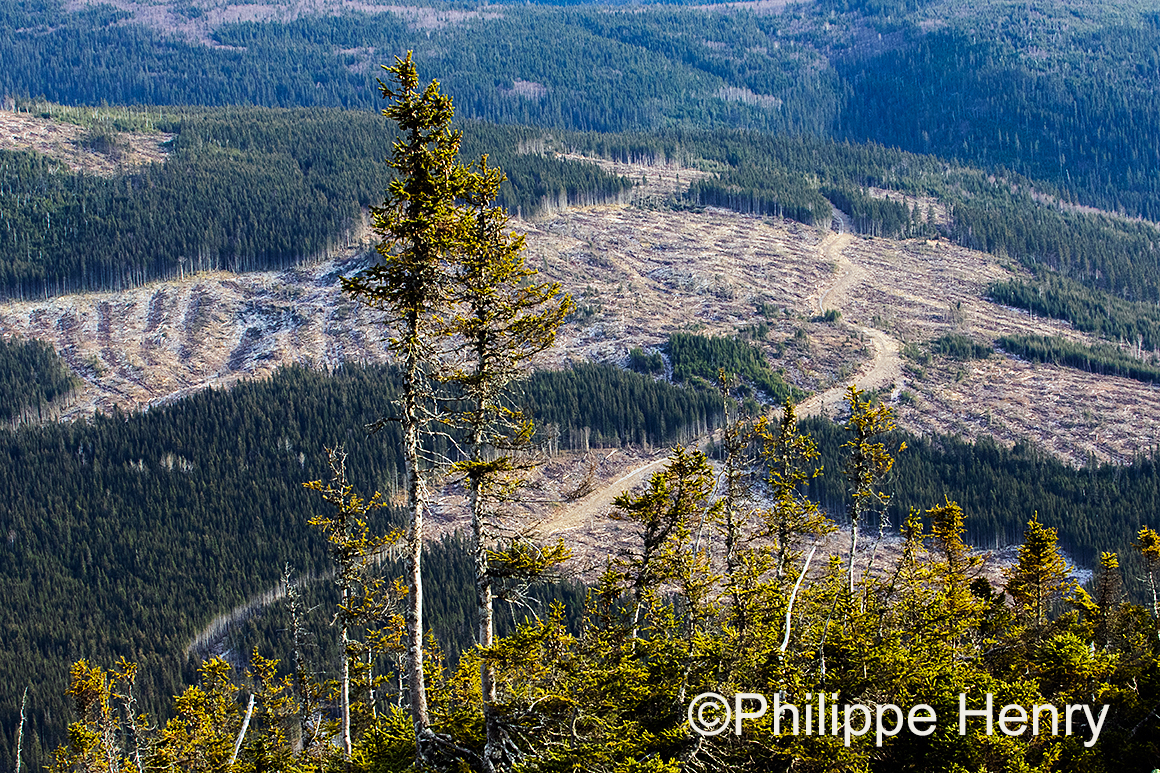
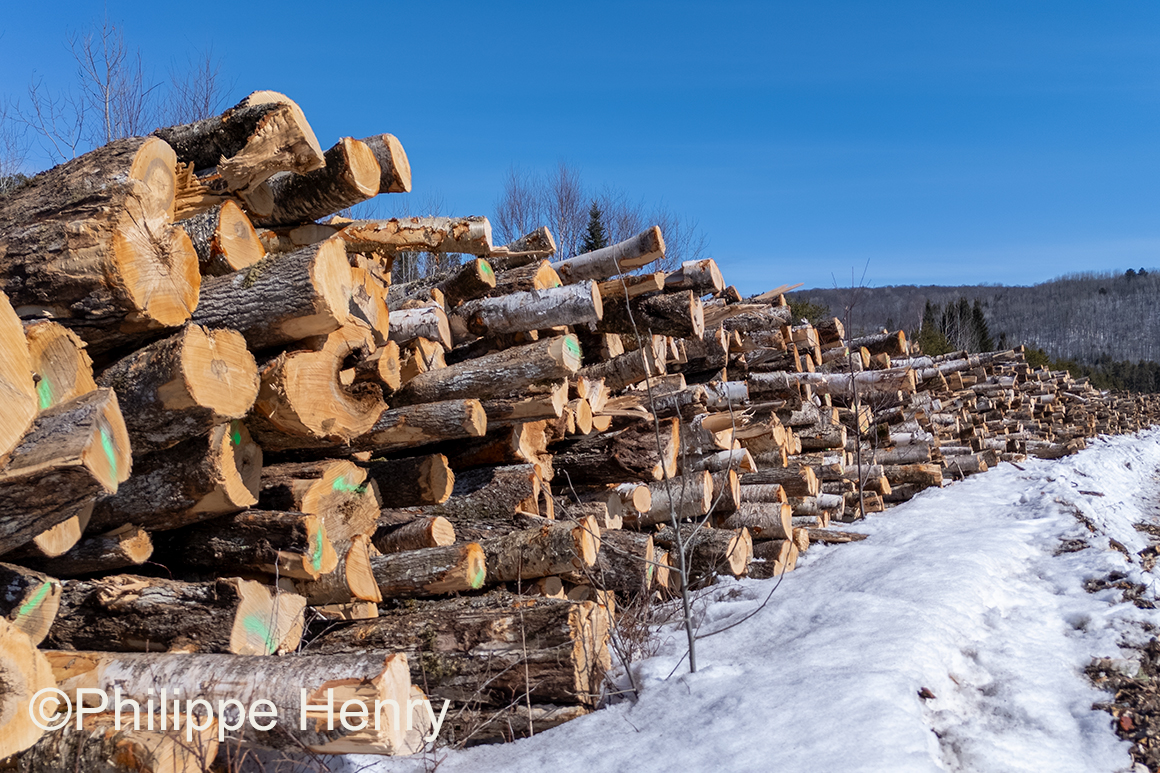
Old-growth forests surrounding Gaspésie National Park have been harvested in the last 35 years.
These past years, caribou have been captured and fitted with satellite collars. The operation involved a skilled net-gunner who fires a weighted net over the animal from the air.
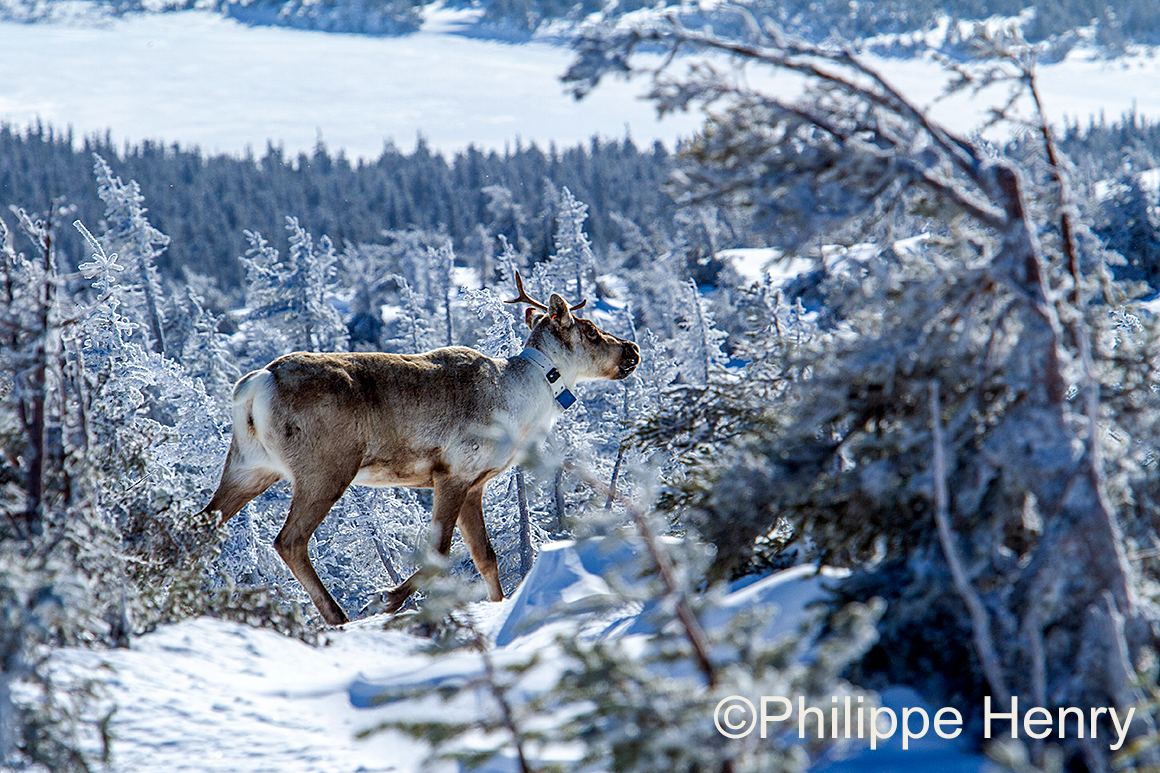
Satellite collars fitted on caribou showed that the animals’ home range overflowed the park’s boundaries into areas logged by forestry companies. |
Authors Biography & Contact Information
 Bio: Philippe Henry is a photographer specialized in wildlife and conservation, a writer and a filmmaker. He is based in La Mauricie, in Quebec. His last book - The Alligator of Texas- was published by Texas A&M University Press / USA. You can follow his photography and watch dozens of short video and film trailers on his facebook page. Photo of Philippe by Veronique Amiard.
E-mail: philippe_henry@hotmail.com
Website: www.philippe-henry.com
Phone number: 1 819 532 1147
Philippe Henry Photographer & Video on Youtube - you can subscribe
Other Articles by Philippe Henry on The Canadian Nature Photographer
Are you crazy over squirrels?
Wildlife along the Saint Lawrence river
The Bull Frog Story
THE CRY OF THE LOON
Seventy-five years of conservation in the Gaspesie National Park,in Quebec
The Beaver a Canadian Emblem
THE WHOOPER SWANS OF FINLAND
Andean Bear Book
The Harlequin Duck, The Bird of the White Waters
A WOMAN IN THE WINTER LAND OF MOOSE BOREALE AU COEUR DE L'HIVER
Watch Video of the Wilderness by Philippe Henry posted on YouTube